
Lake County Arrest Records and Charges
Lake County arrest records are tied to law-enforcement and jail activity. The Lake County Sheriff's Office is based at 613 3rd Ave in Two Harbors and is led by Sheriff Nathan Stadler. The sheriff enforces laws, investigates crimes and accidents, apprehends people accused of crimes, serves civil papers, enforces court orders, operates the jail, and runs the 911 dispatch center.
After an arrest, the court charge record depends on what the prosecutor files. The Lake County Attorney's Office prosecutes crimes occurring in Lake County, including felonies, gross misdemeanors, misdemeanors, petty misdemeanors, ordinance violations, and juvenile matters. The full case file and outcome belong with Lake County criminal court records; the booking and custody side belongs with jail and inmate records.
The assigned sheriff image links to the official Lake County Sheriff page.
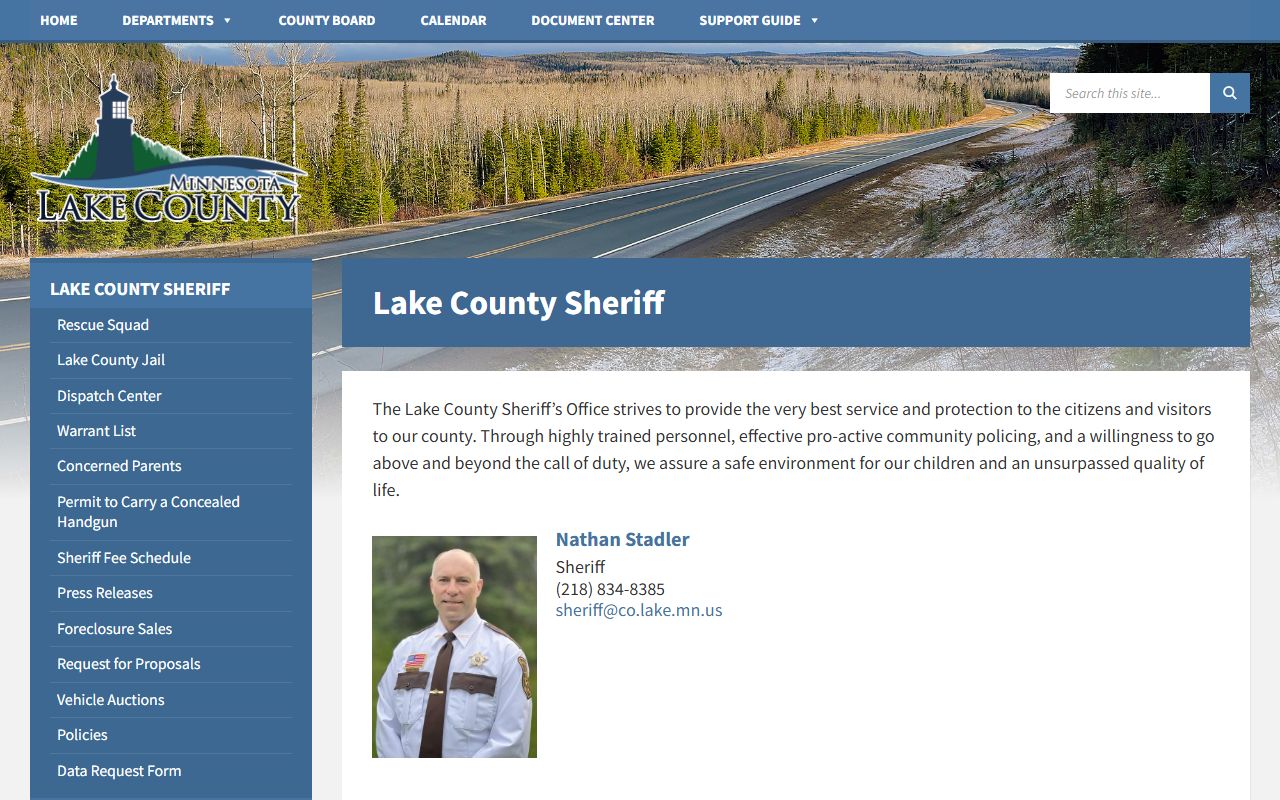
That source anchors the law-enforcement side of Lake County arrest records before the case moves into court.
Find Lake County Arrest Records
Start with the official source that matches the question. For current custody, use the Lake County Jail page and roster. For an active warrant list, use the sheriff warrant page. For court charges after arrest, use MCRO Case Search and select Lake County when narrowing results.
- Check the Lake County Sheriff's Office or jail source for arrest, custody, roster, or warrant information.
- Search MCRO by case number when the filed court case number is known.
- Search by name and set Lake County as the court location when the case number is unknown.
- Open the case and review the charge list, Register of Actions, hearing entries, and disposition.
- Contact Court Administration for certified copies or courthouse-only records.
MCRO may not return a pending criminal, traffic, or petty misdemeanor case by defendant name when there is no conviction. In those cases, a case number from a citation, complaint, notice, or court paper is the safer search key.
Lake County Court Charges After Arrest
The prosecutor decides what formal charges to file after review of the law-enforcement referral. The Lake County Attorney represents the county, prosecutes criminal offenses, initiates child protection petitions, and files involuntary commitment actions when the law allows. The office does not represent private citizens and cannot give individual legal advice.
The assigned Lake County Attorney image comes from the official attorney page.
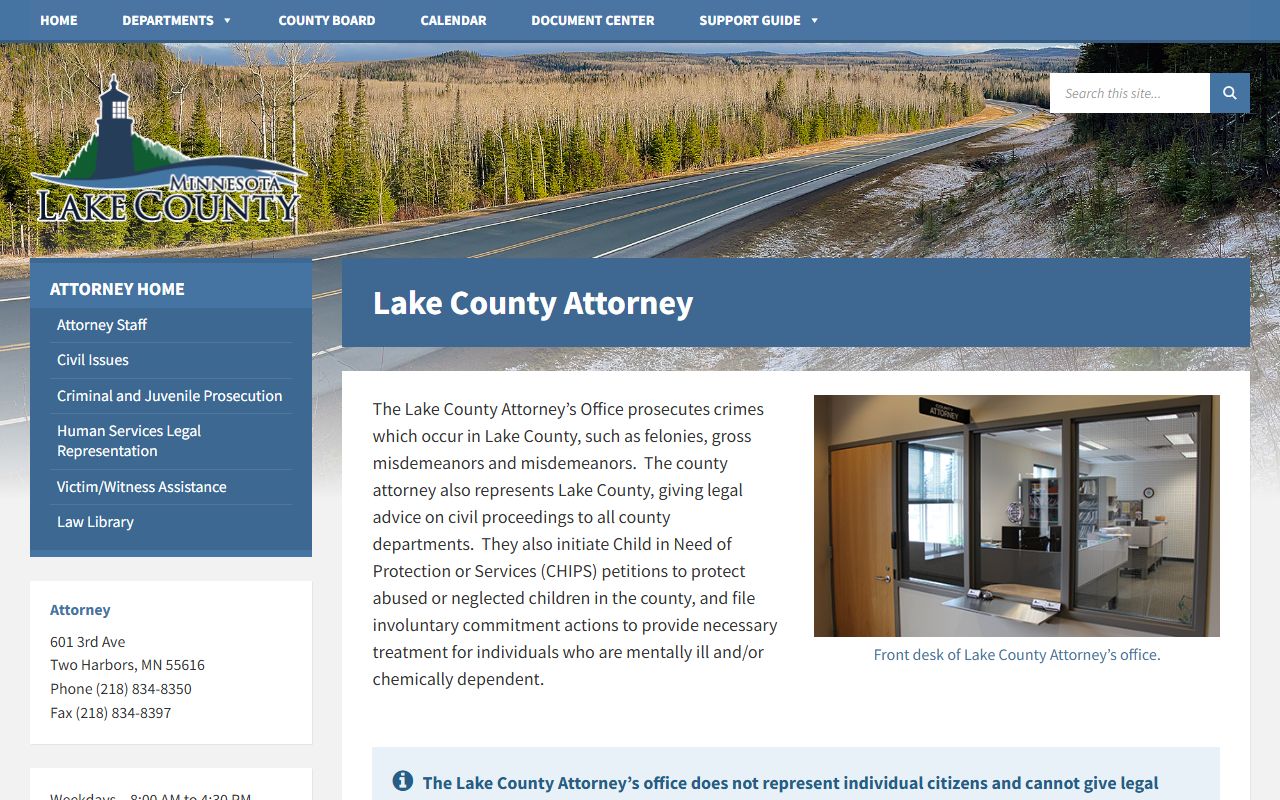
That source explains why a sheriff arrest and a court charge can differ: the prosecutor's filed charge is what starts the court case.
The assigned staff image links to the Lake County Attorney staff page.
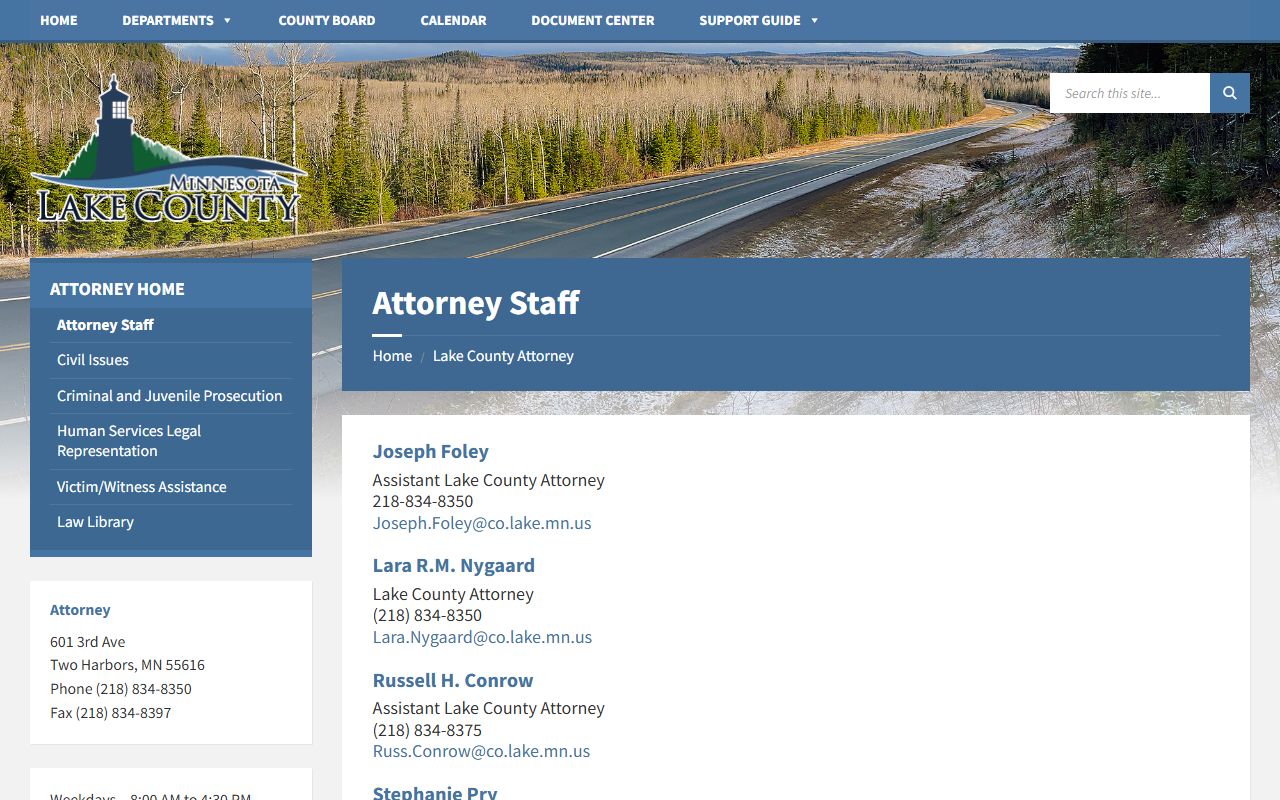
The staff page identifies the local prosecution office and contact structure for filed criminal matters.
Lake County Charging Documents
A charge record starts with a filed charging document. Minnesota Lake County cases may begin from a citation, complaint, or other charging paper entered in MNCIS. The public record can show the statute, level, offense date, agency, and first court event, but some details may be redacted or unavailable online.
| Document | Who Files It | How It Functions |
|---|---|---|
| Complaint | Prosecutor, often based on law-enforcement referral. | Common charging document that starts many criminal cases. |
| Information | Prosecutor. | Formal accusation used when allowed by procedure. |
| Indictment | Grand jury. | Formal accusation for serious matters when that process is used. |
Note: The research did not identify a separate Lake County charging database outside MCRO and official sheriff or county attorney sources.
Lake County Charge Status
Charges can change after the first filing. A charge may be pending at an early hearing, amended after review, reduced as part of a plea, dismissed by the court, or resolved through conviction or another disposition. The final status should be read from the Register of Actions and disposition, not from the first charge name alone.
| Status | What It Means |
|---|---|
| Pending | The charge has been filed and no final public outcome has been entered. |
| Amended | The charge text, level, statute, or count changed after filing. |
| Reduced | The final charge or sentence level is less serious than the original accusation. |
| Dismissed | The charge did not move forward to conviction. |
| Convicted | The court record shows a guilty plea, verdict, or conviction entry. |
Lake County Charge vs Conviction
The Lake County Jail page warns that arrest does not mean guilt or conviction and that pending legal status must be confirmed through the Minnesota Court System. The same caution applies to court charges after arrest. A charge can appear in a case file even if it is later dismissed, reduced, or resolved in a different way.
| Point | Charge | Conviction |
|---|---|---|
| Record stage | Filed accusation after arrest, citation, or referral. | Final or later outcome after plea or verdict. |
| What it proves | That an accusation was filed. | That the court entered a conviction outcome. |
| Where to verify | Complaint, charge list, and docket entries. | Disposition, sentencing order, and BCA public conviction data when eligible. |
Lake County Arrest Agencies
The county law-enforcement contacts page lists the Lake County Sheriff, Two Harbors Police Department, Silver Bay Police Department, and Ely Area Police Department. City police agencies may issue citations or make arrests, but filed court cases route into Lake County District Court and MNCIS.
The assigned emergency and law-enforcement image links to the Lake County law-enforcement contacts page.
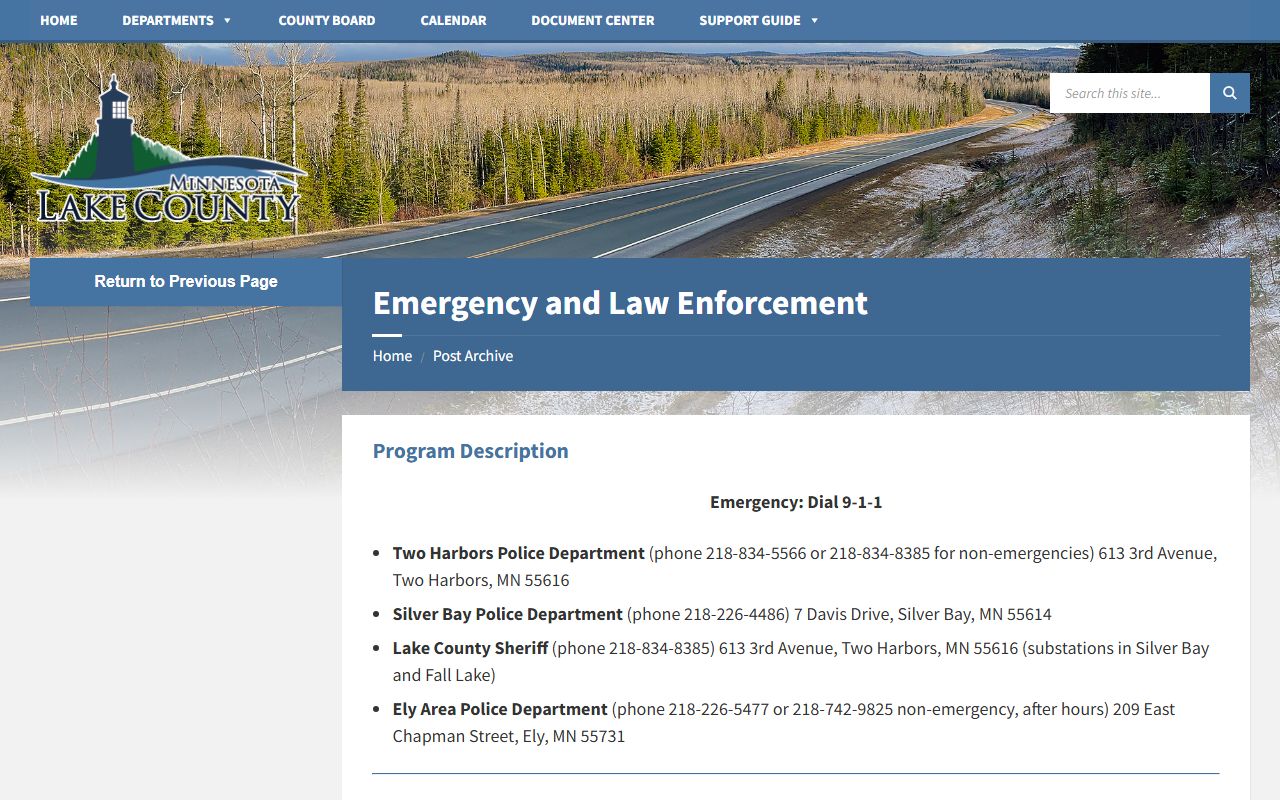
Those contacts are useful when the arrest source is a city police agency rather than the sheriff.
The sheriff dispatch center page explains that dispatch/corrections officers enter ICRs, warrants, and background checks for other agencies.
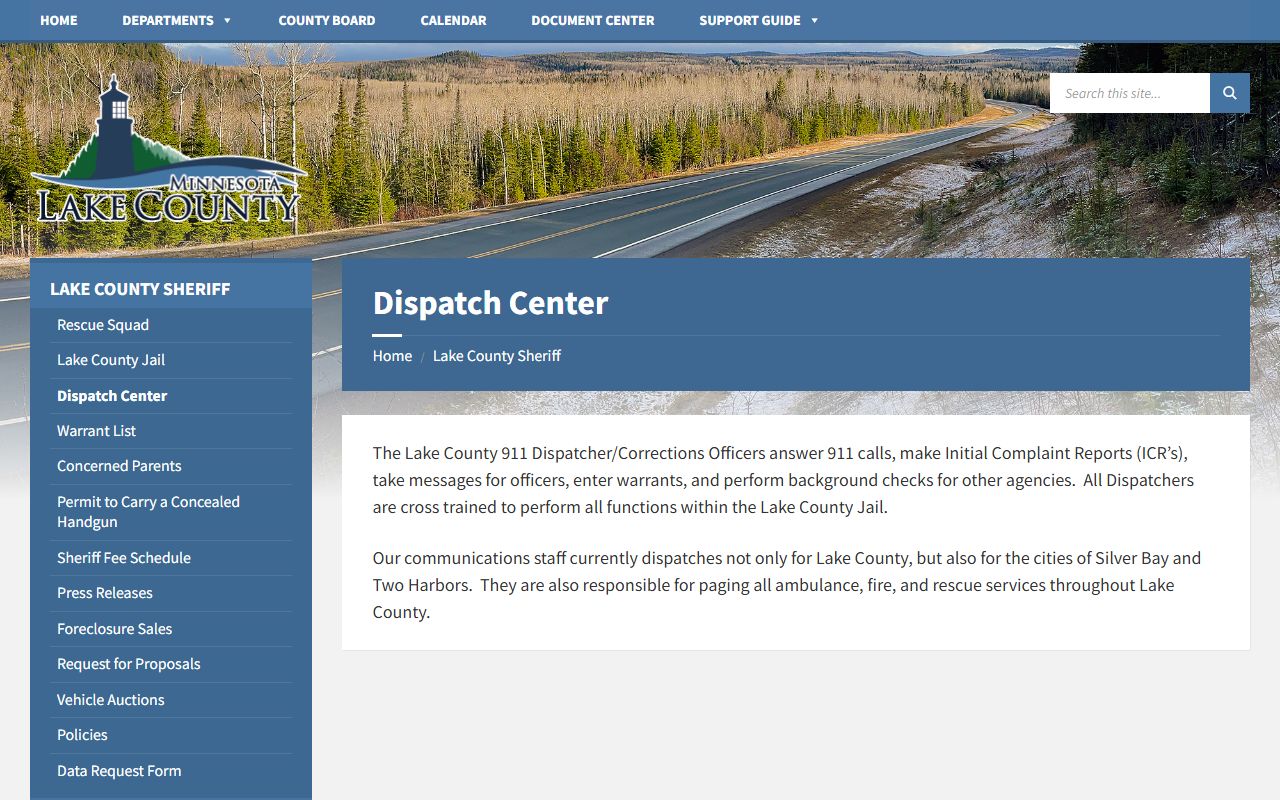
Dispatch context helps separate incident and warrant data from the formal court charge record.
Public Access to Lake County Charge Records
Public court charges are usually checked through MCRO and local Court Administration. Public arrest or law-enforcement data is controlled by Minn. Stat. section 13.82. Criminal-history conviction data is controlled by Minn. Stat. section 13.87 and is available through BCA only within the public data scope.
The assigned prosecution image links to the criminal and juvenile prosecution page.
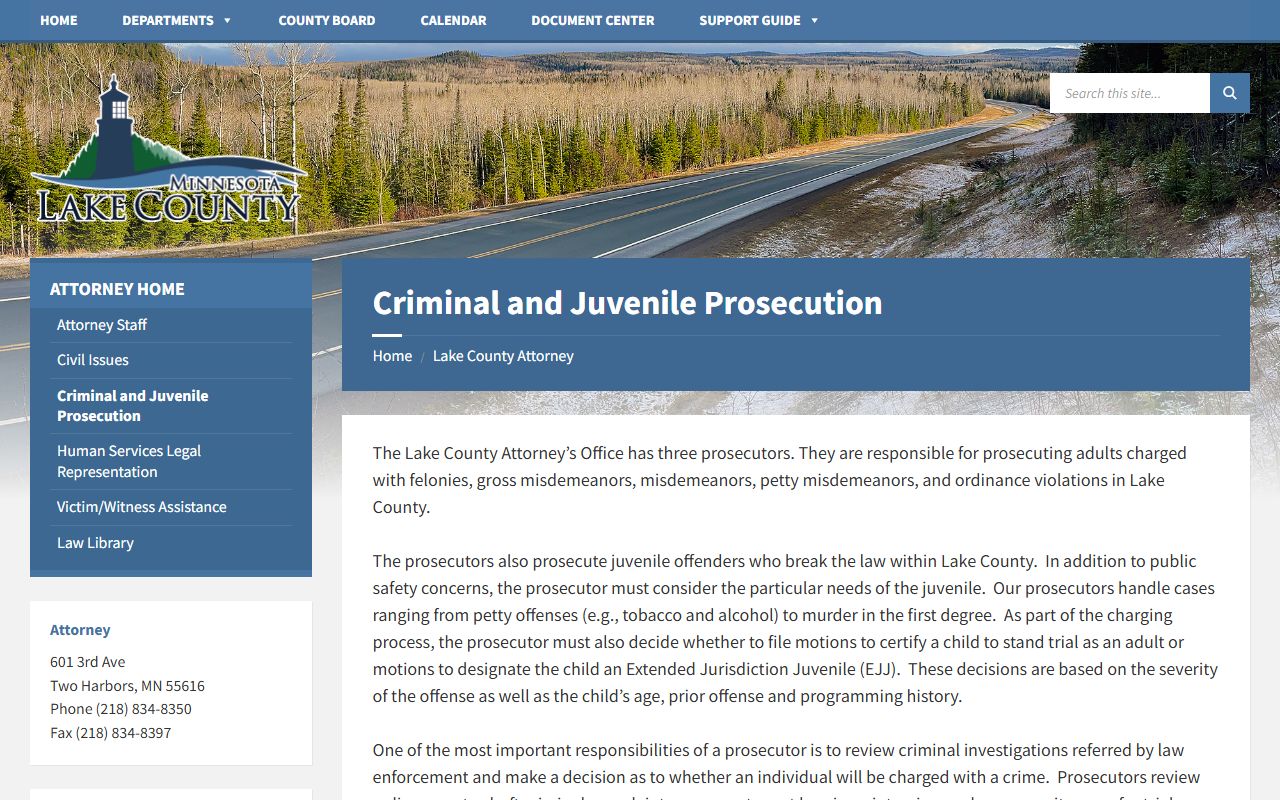
That source confirms the local attorney office prosecutes adult and juvenile matters, though juvenile records are restricted.
Sealed and Expunged Charge Records
Sealed and expunged records are not open public records. Minnesota expungement seals records from public view but does not destroy them. Some records are eligible for automatic Clean Slate sealing, while others require a petition in District Court. Juvenile records, child protection records, and some confidential case types are restricted by law or court rule.
| Point | Sealed | Expunged |
|---|---|---|
| Public access | Blocked by law or court order. | Blocked from public view through expungement. |
| Record existence | The record still exists in controlled systems. | The record is sealed, not destroyed. |
| Lake County process | Ask Court Administration about access or order requirements. | Use Minnesota expungement law, forms, or automatic process if eligible. |
Restricted Lake County Arrest Records
Not every arrest or charge detail is public. Juvenile distribution is restricted by Minnesota law. Active investigative data, sealed warrants, confidential identifiers, victim-identifying information, and sealed or expunged court records may be withheld. The Lake County Jail roster also warns that information may be incomplete, outdated, or affected by false identification, so legal status should be verified with the Minnesota court system.