
How to Search Lake County Court Records
Lake County court records are searched first through Minnesota Court Records Online, often called MCRO. The portal covers Minnesota District Court case records, including Lake County District Court, when the case type and document are public for remote access. MCRO is useful for case details, registers of actions, hearing data, monetary judgments, and some public documents. It is not the certified court file.
Use the most exact search path available. Case number is the strongest path for a known file. Name search can work for many civil, family, probate, and criminal matters, but pending criminal, traffic, and petty misdemeanor cases with no conviction may not appear by defendant name. Citation number is better for traffic tickets. Attorney search can help when a lawyer name or Minnesota license number is known.
- Open MCRO Case Search and accept the access terms if prompted.
- Choose Name, Case Number, Citation Number, or Attorney.
- Select Lake County in the court-location filter when a statewide name search returns too many matches.
- Review Case Details and the Register of Actions for hearings, filings, outcomes, and public documents.
- Contact Lake County Court Administration when a certified copy, courthouse-only record, older file, or correction question is involved.
| MCRO field | Use in Lake County searches |
|---|---|
| Name | Search by person or business name, with exact names or a trailing wildcard after two letters. |
| Case Number | Use Minnesota format such as county code, case type, year, and sequence number. |
| Citation Number | Use the citation path for traffic and petty misdemeanor records tied to a ticket. |
| Case Category | Narrow results to Civil, Criminal, Family, Probate or Mental Health. |
| Court Locations | Select Lake County to keep the result set focused on local District Court files. |
Lake County District Court System
Minnesota uses a unified District Court trial system. Lake County District Court is the local trial court for civil, family, probate, juvenile, criminal, and traffic cases filed in the county. There is no separate Lake County justice court, municipal court, county court, or stand-alone probate court for state case records. City police and the sheriff may issue citations or make arrests, but filed court cases route into District Court and MNCIS.
Lake County is part of the Sixth Judicial District, which also serves Carlton, Cook, and St. Louis counties in the Arrowhead region. Appeals from Lake County District Court ordinarily go to the Minnesota Court of Appeals, with further review by the Minnesota Supreme Court when the rules allow it.
Case flow: Law enforcement or filing party › Lake County District Court › Minnesota Court of Appeals › Minnesota Supreme Court
| Court | Jurisdiction | Case Types |
|---|---|---|
| Lake County District Court | Trial court for Lake County | Civil, criminal, family, probate, juvenile, traffic, and conciliation matters. |
| Minnesota Court of Appeals | Intermediate appellate court | Appeals from trial courts, agencies, and local government decisions. |
| Minnesota Supreme Court | State court of last resort | Final state appellate review and court-system administration. |
Lake County Courthouse Access
The Lake County Courthouse in Two Harbors houses District Court and Court Administration. The official court page lists the court administrator as Interim Court Administrator Kathy McFarlane and states that a public access to court records computer is available at the courthouse. That terminal matters because some records available at courthouse terminals are not displayed in MCRO.
Types of Lake County Court Records
Lake County District Court creates several types of case records. Civil records can include complaints, answers, motions, affidavits, orders, judgments, and satisfaction entries. Criminal records can show charges, pleas, hearings, dispositions, sentencing orders, probation terms, restitution, and court fees. Family files include divorce, custody, paternity, parenting time, and support matters. Probate files cover estates, wills, guardianships, conservatorships, trusts, and related orders.
Traffic and citation records become Lake County court records once filed with District Court. Juvenile, adoption, civil commitment, protective order, and sealed records are handled with stronger access limits. A public search result should be read as a court file index and not as proof that every document is online.
- Criminal records - filed cases from complaints, citations, prosecutor charges, hearings, pleas, and sentences.
- Civil records - lawsuits, judgments, evictions, conciliation claims, name changes, and motions.
- Family and divorce records - dissolution, custody, paternity, parenting time, and support filings.
- Probate records - estate, will, guardianship, conservatorship, trust, and appointment records.
- Traffic records - citation, payable offense, mandatory appearance, fine, and disposition records.
What Lake County Court Records Show
Lake County court records follow Minnesota District Court and MNCIS conventions. A case number is created when a citation, complaint, petition, or other filing opens a case. Observed Lake County calendar entries use formats such as 38-CR for criminal and 38-VB for payable citation matters. The case type helps identify the file, but MCRO warns that a case type may not be the final outcome.
| Field | What It Shows |
|---|---|
| Case Number | Shows the county code, case type letters, filing year, and sequence number. |
| Filing Date | Marks when the case was opened or the citation was filed in MNCIS. |
| Parties | Lists names and roles such as plaintiff, defendant, petitioner, respondent, or attorney. |
| Charges / Cause | Identifies the offense, claim, petition type, or legal issue that created the file. |
| Disposition | Shows the outcome, such as judgment, dismissal, plea, conviction, or other resolution. |
| Sentence / Judgment | Shows fines, custody, probation, restitution, civil judgment terms, or court orders when public. |
Lake County Court Access Rules
Minnesota separates judicial-branch court-record access from executive-branch data laws. For Lake County court records, the practical path is MCRO for public remote records, the courthouse public access terminal for some records not available online, and Lake County Court Administration for certified copies or questions about missing documents. Sheriff, jail, warrant, and criminal-history data use separate Minnesota statutes.
Key Statutes:
Minnesota Rules of Public Access, Rule 8 - controls which court records may be remote, terminal-only, or not public.
Minn. Stat. section 13.82 - governs law-enforcement public data and data that may be withheld.
Minn. Stat. section 13.87 - governs public criminal-history data from the BCA.
Minn. Stat. section 357.021 - authorizes many district-court filing and copy fees.
Restricted Lake County Court Records
MCRO does not display every record that may exist in the courthouse system. Domestic abuse order for protection and harassment restraining order case types are not available online because federal law restricts internet display. Child protection and certain juvenile delinquency case types are also excluded. Public documents in civil commitment case types are not in MCRO.
Sealed and expunged records are not public in the same way as normal case records. Minnesota expungement seals records from public view but does not destroy the record. Adoption files, juvenile records, protected addresses, Social Security numbers, financial account data, victim information, minor identities, and confidential forms may be withheld or redacted. Access questions should go to Court Administration, since the correct rule depends on the case type and order.
Lake County Court Programs
No official source in the research identified a separate Lake County drug court, veterans court, DWI court, or mental health court. The county does have court-adjacent intervention points. The Lake County Attorney initiates CHIPS petitions and involuntary commitment actions when statutory grounds exist. The jail program office lists AA, 12-Step, Recovery, Transitions, Bible Study, and Anger Management programs for people in custody.
Remote hearing tools are also part of modern court access. Minnesota court guidance covers Zoom or telephone attendance, eCheck-In, public-defender applications, statement-of-rights forms, and digital exhibit submission through MNDES when the court allows it.
Lake County Sheriff and Jail
The Lake County Sheriff's Office is next to the courthouse area in Two Harbors and is led by Sheriff Nathan Stadler. The office enforces county, state, and federal laws, investigates crimes and accidents, apprehends suspects, serves civil papers, enforces court orders, operates the jail, and runs 911 dispatch. The county covers 2,062 square miles, with duty stations in Two Harbors, Silver Bay, and Fall Lake.
The Lake County Jail has a 25-inmate capacity and may house inmates from neighboring counties such as Cook and St. Louis. The roster is public detention data, but the jail page warns that arrest does not mean guilt or conviction and that legal status should be confirmed through the Minnesota Court System. The web roster is separate from Lake County inmate records and from the sheriff's warrant list.
Marriage, Divorce, and Probate
Marriage and divorce records split between two local offices. Lake County Vital Records, inside the Recorder's Office, handles marriage licenses and marriage certificate copies. Divorce records are District Court files, not vital-record certificates. Adoption, divorce, and probate records are filed with Court Administration, according to the county genealogy page.
Probate is handled by the Probate Division of District Court. Informal probate can be used for less complicated estate matters, while formal probate requires a petition and hearing in more complex or disputed matters. The probate FAQ says filing can occur after 120 hours have passed since death and generally no later than three years after death.
- Personal representative
- The person appointed to administer a probate estate.
- Conservator
- A person appointed to manage financial affairs for a protected person.
- Expungement
- A court process that seals a record from public view without destroying it.
Lake County Court Records Fees
Lake County District Court uses the statewide District Court fee schedule. MCRO records are not certified. Certified court documents and certified civil judgment search results come from local court administration. Fees can change, so the court counter should be used for a current quote before mailing payment.
| Item | Amount |
|---|---|
| Certified copy of an instrument from civil or criminal proceeding | $14 |
| Exemplified and certified copy | $28 |
| Uncertified copy, printout, or screen print | $0 |
| Case-management report, 1-50 pages | $5 |
| Civil first paper filed | $310 |
| Divorce filing | $390 |
| Probate first paper filed | $310 |
Interpret Lake County Court Records
Read a Lake County Register of Actions in order. The earliest entries often show the citation, complaint, petition, or filing that opened the case. Later entries show notices, hearings, motions, orders, and disposition. A charge is an accusation. A conviction is an outcome after a plea or finding of guilt. A dismissal, amended charge, or reduced charge can change the meaning of the file.
Common case types help with first-pass sorting. CR often marks a mandatory criminal or traffic appearance. VB is commonly used for non-mandatory payable citation matters. PR appears in probate files, FA in family files, and CV in civil files. The docket still controls the result, so do not rely on the case-type letters alone.
Accuracy and Record Limitations
MCRO terms state that remote records are unofficial and limited. Records may lag behind a hearing, a new citation may take several days to appear, and some public courthouse records are not available online. The Court Payment Center states that most citations are filed within seven business days, but some take longer. For errors or questions about the meaning of court information, MCRO directs users to local court administration.
Note: Certified copies and court-confirmed status should come from Lake County Court Administration, not from a screen capture.
Lake County Court History
Lake County court history is unusually useful for record users. The first formal courthouse was a wooden building in Two Harbors, built in 1887. It burned in 1904, but official history says most county records were saved. The replacement courthouse was built in 1905, designed by James Allen MacLeod, and cost $80,000. Its restored Angel of Justice mural was hidden by a lowered courtroom ceiling in 1945, then removed, restored, and placed in the main corridor in 1976.
Federal Records Near Lake County
State Lake County court records are separate from federal records. The U.S. District Court for the District of Minnesota serves all 87 Minnesota counties, with the nearest staffed federal courthouse in Duluth. The official Duluth federal courthouse page is shown below.
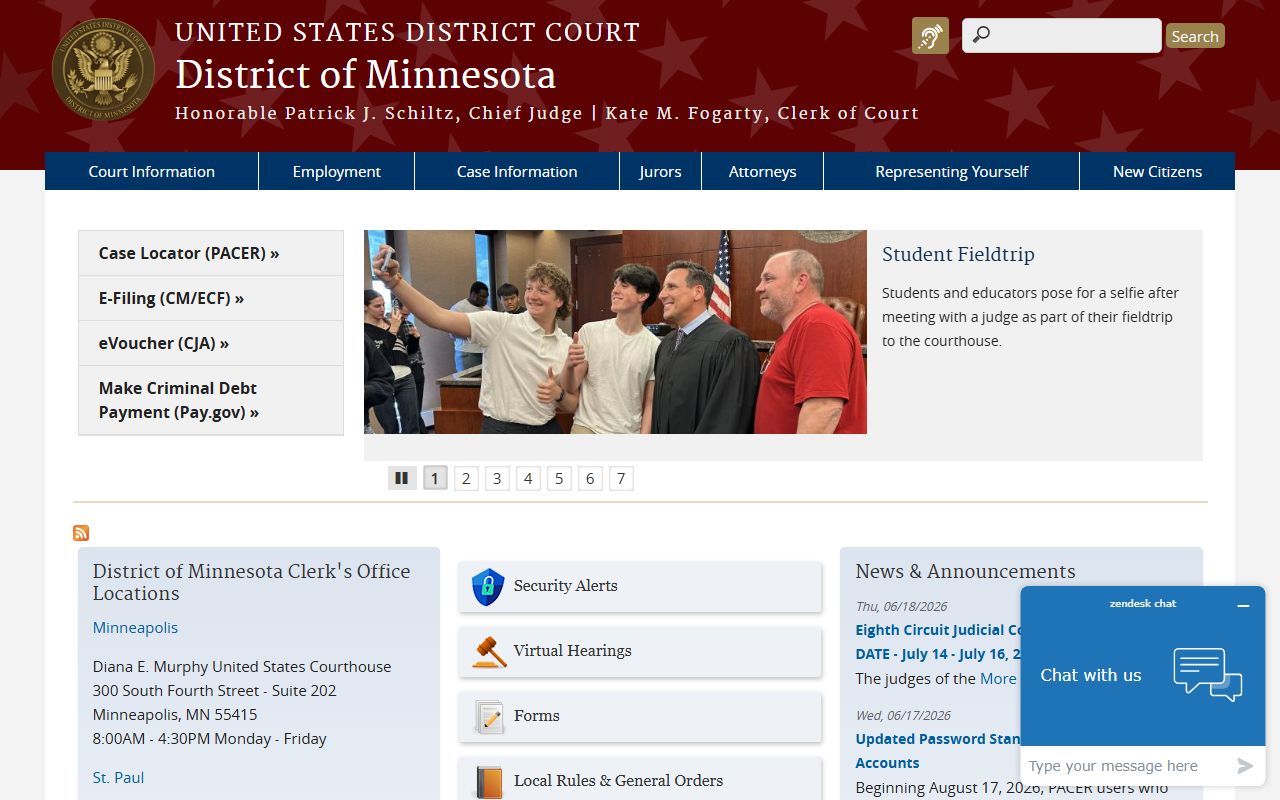
Federal criminal, civil-rights, bankruptcy, and federal-question cases will not appear in Lake County MCRO, even when the people or events are local.
The Duluth federal courthouse page provides the closest staffed federal courthouse context for Lake County residents.
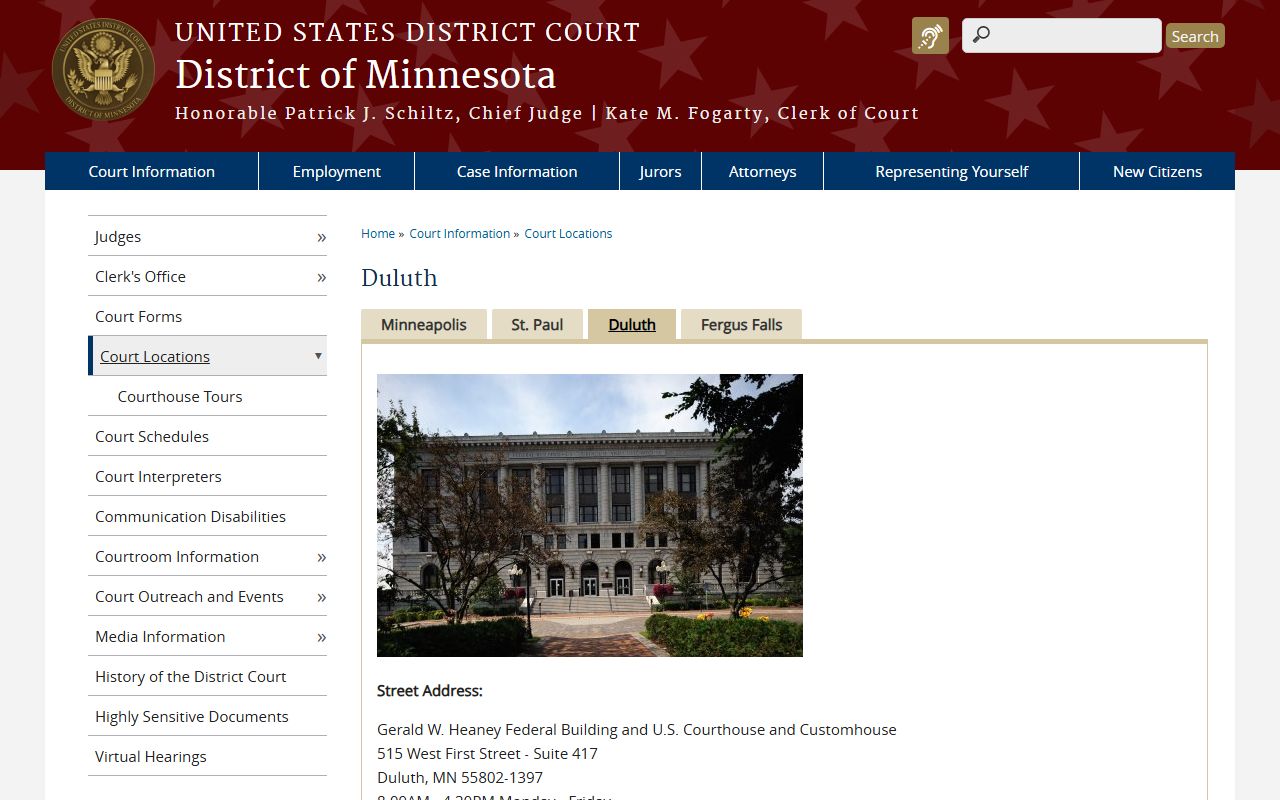
The courthouse source is useful for federal filing and jury-contact routing, while Lake County District Court remains the source for state trial-court records.
The federal court's Duluth courthouse jury contact page was also captured for Lake County federal-court context.
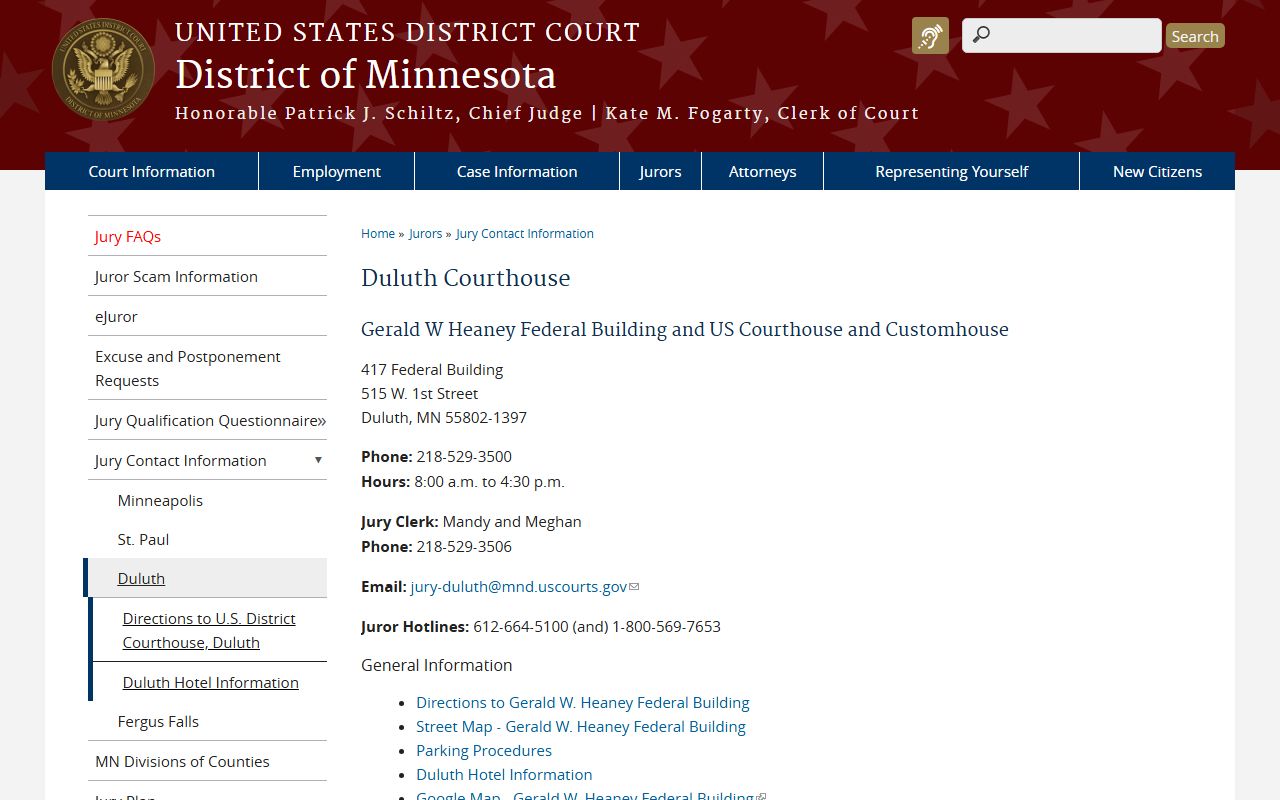
Jury contacts and federal courthouse hours belong to the federal system, not to Lake County Court Administration.
The District of Minnesota judges page confirms the federal district serves every Minnesota county.
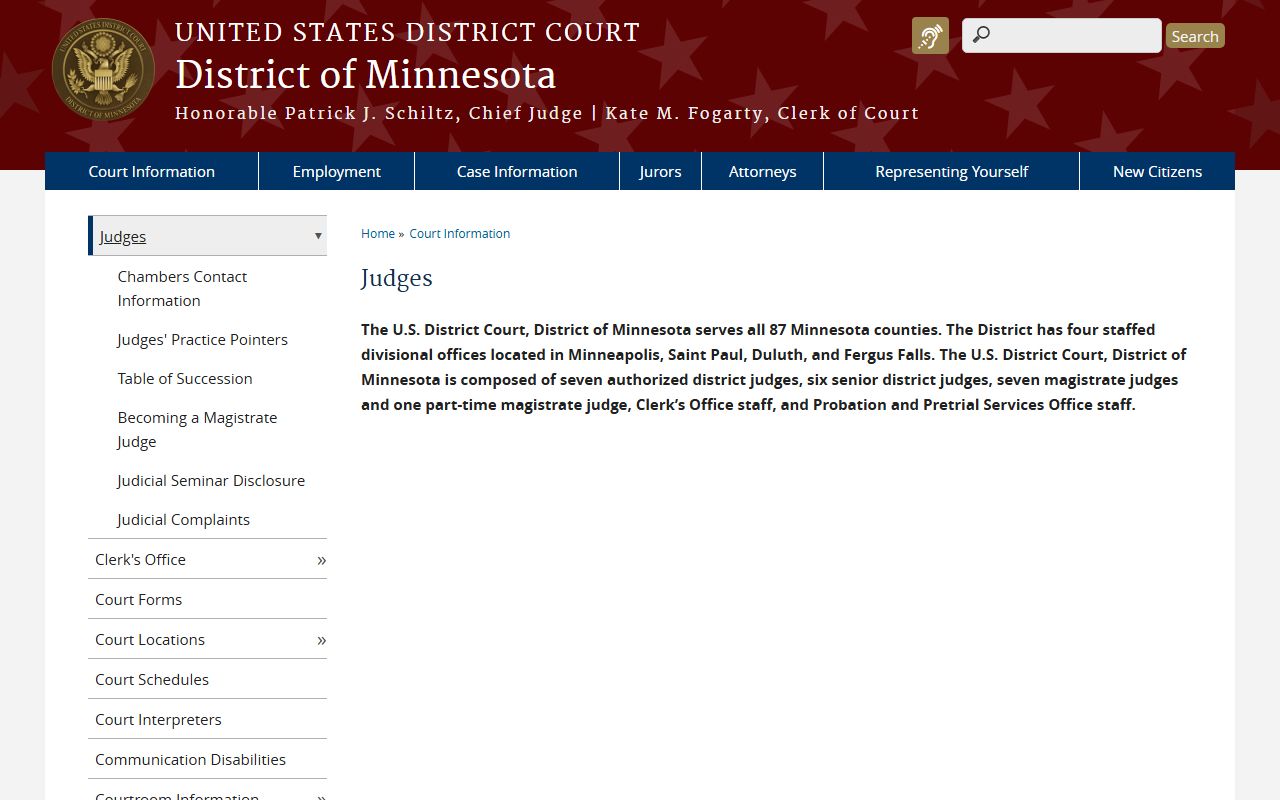
That statewide federal reach explains why a Lake County resident may need both MCRO for state cases and federal tools for federal dockets.
Federal Docket Search Tools
PACER's CM/ECF court lookup identifies federal filing and docket systems by court.
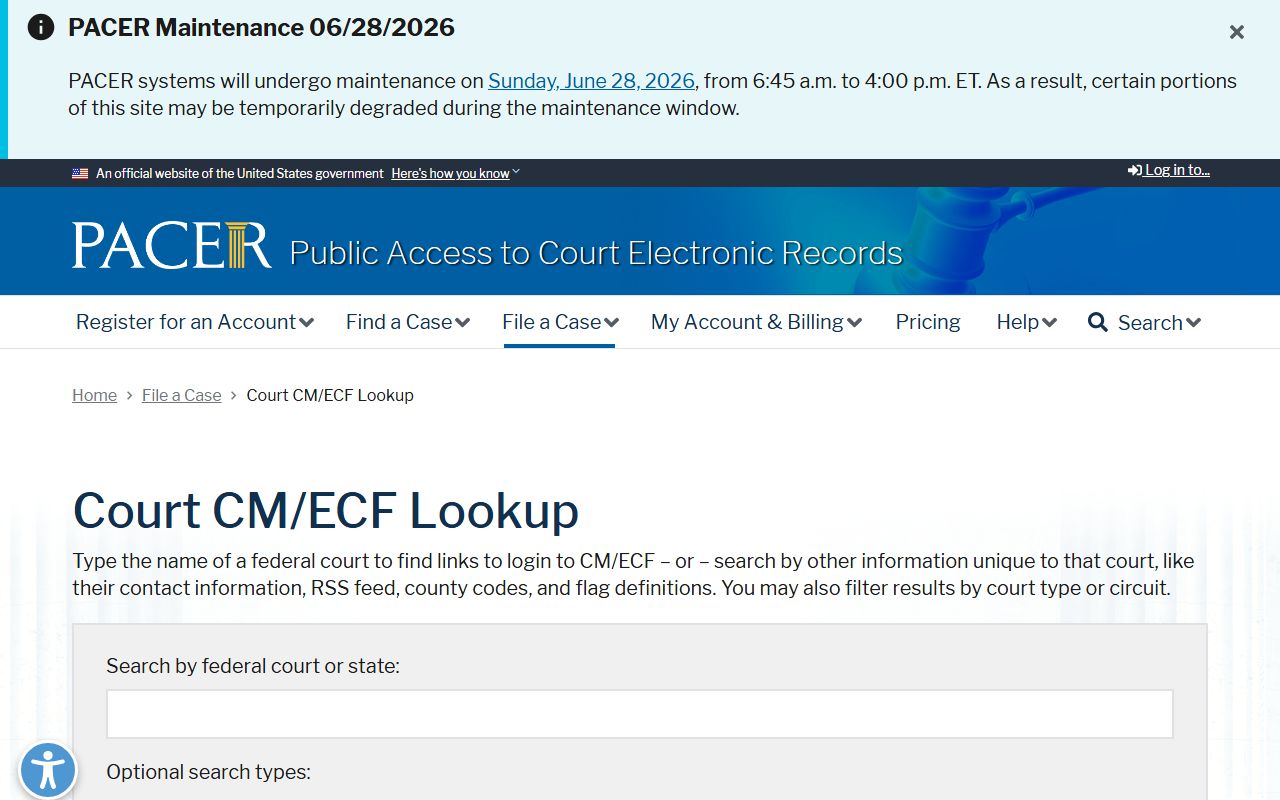
Public users need PACER access for many federal documents, while state Lake County court records remain in MCRO and Court Administration.
The PACER listing for Minnesota District Court gives the federal district court lookup record.
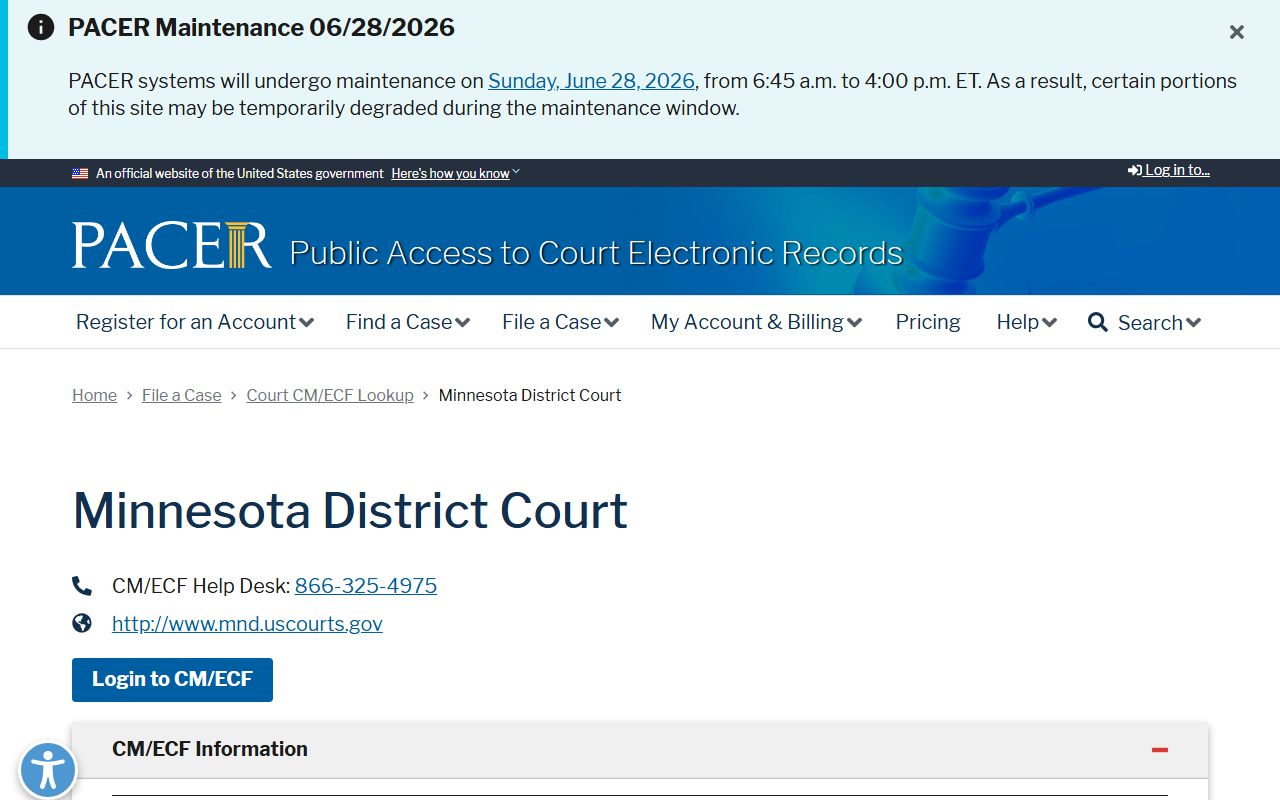
The Minnesota federal district listing is a docket-access route, not a county District Court record source.
The U.S. Bankruptcy Court for the District of Minnesota is the bankruptcy source for the state.
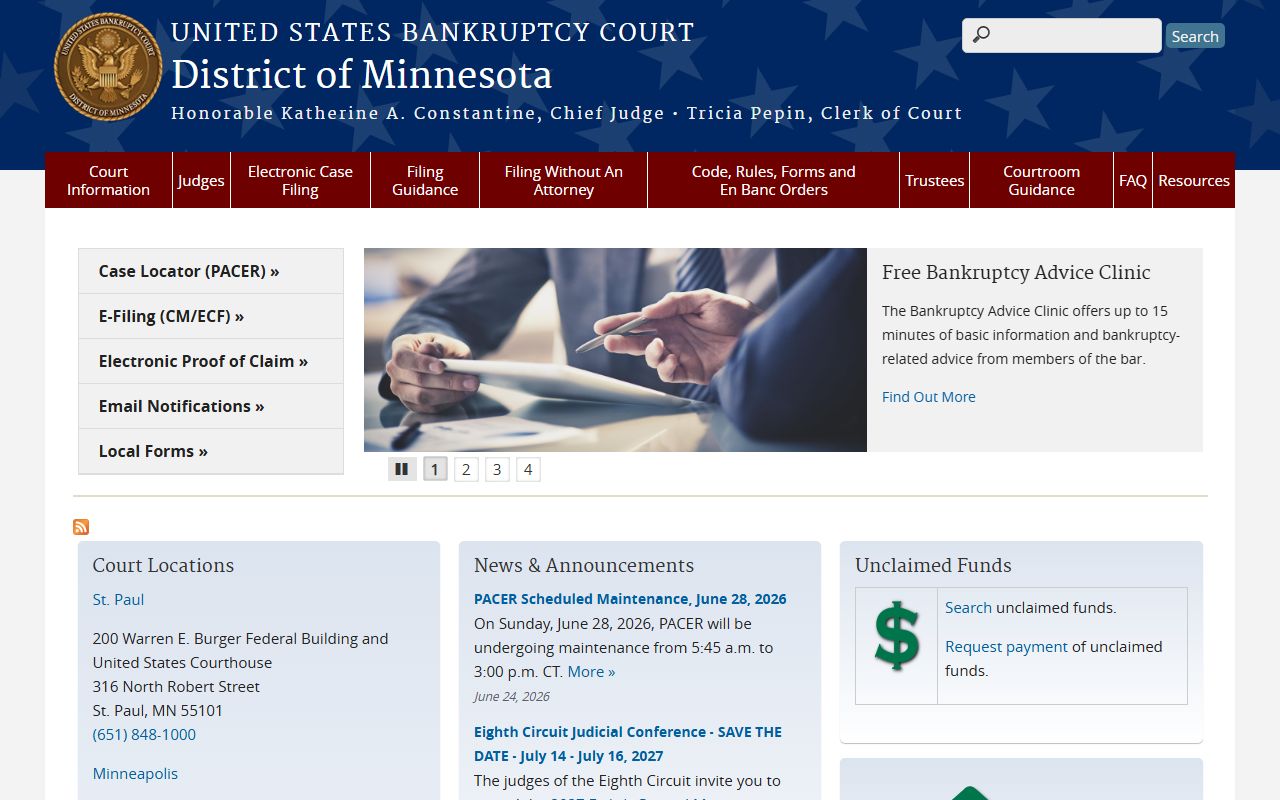
Bankruptcy records do not appear in Lake County District Court case search, even when a debtor lives in Lake County.
The PACER listing for Minnesota Bankruptcy Court identifies the bankruptcy CM/ECF system.
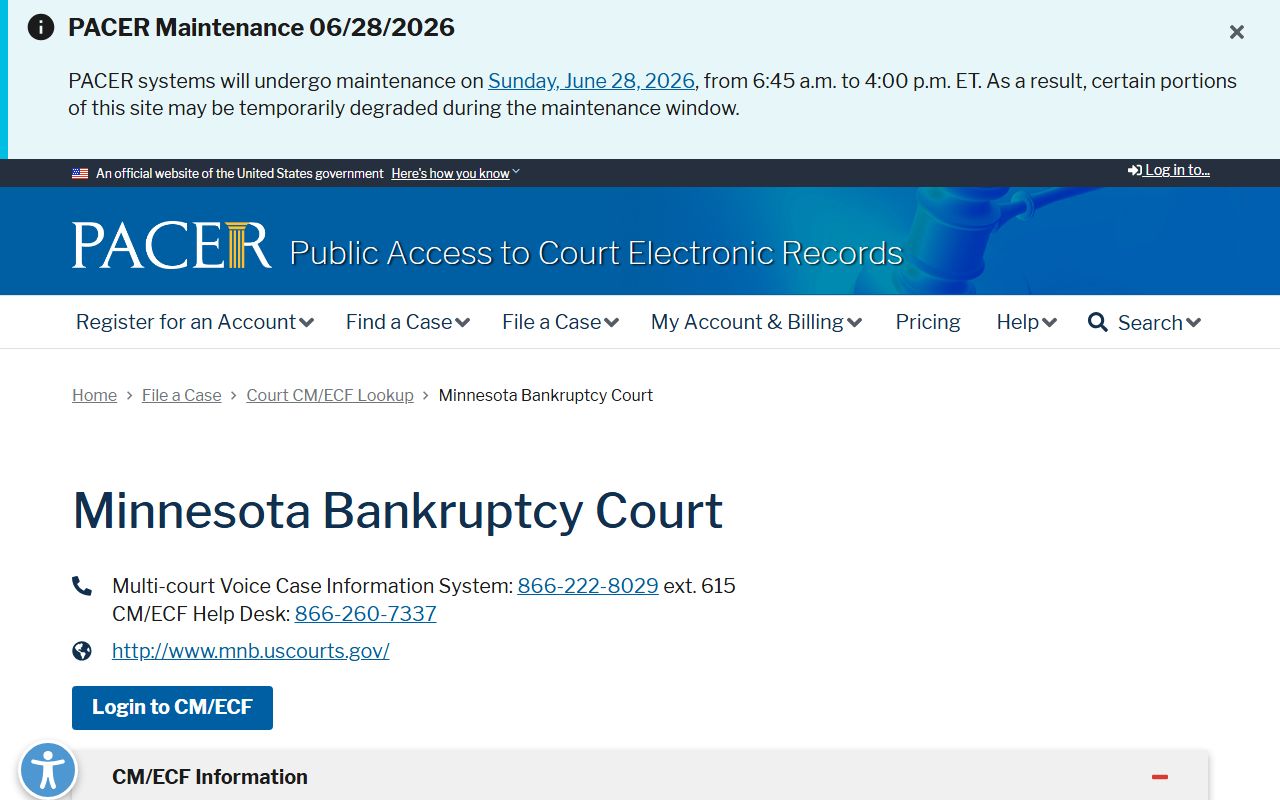
Use the bankruptcy court's system for bankruptcy filings and Lake County Court Administration for state probate, civil, and criminal records.
The U.S. Attorney for the District of Minnesota source was captured for federal prosecution context.
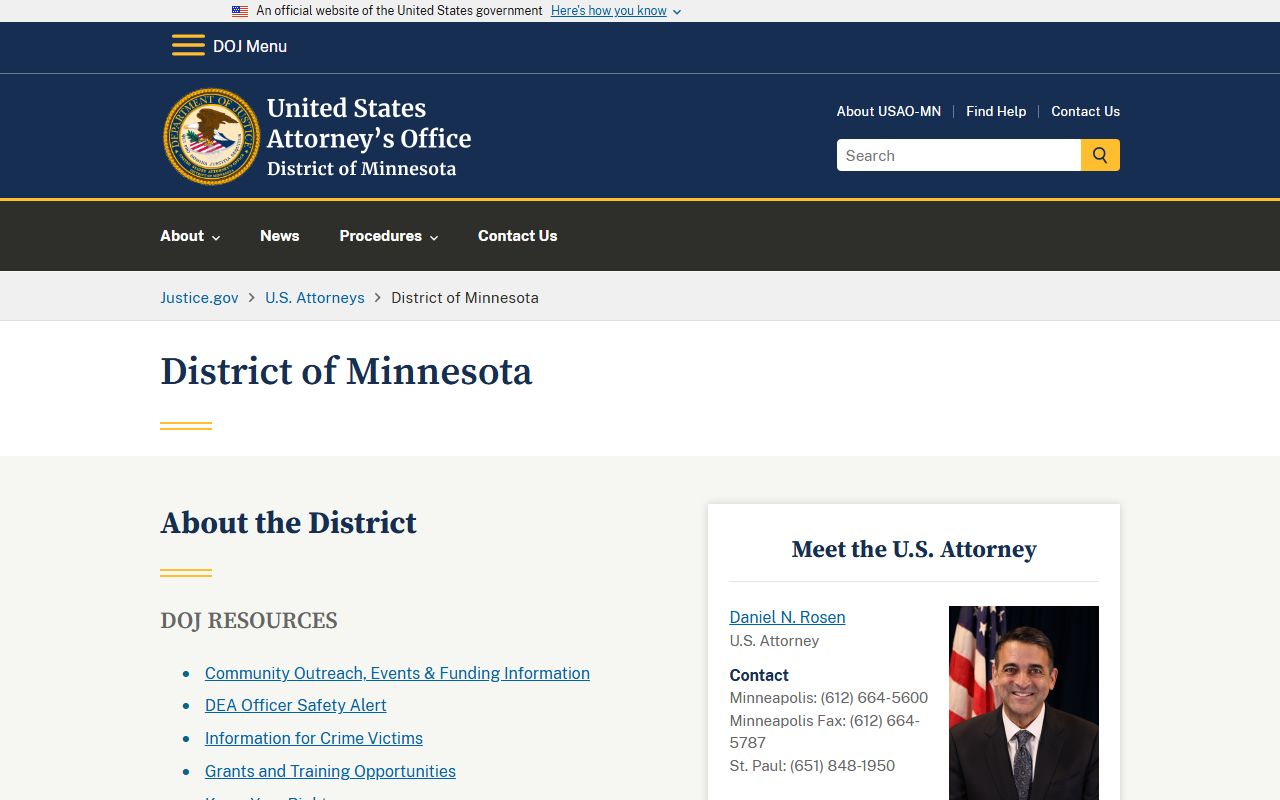
Federal prosecution material is useful background, but local state charges are prosecuted by the Lake County Attorney's Office.
CourtListener can help with legal research, though it is not the official source for certified Lake County court records.
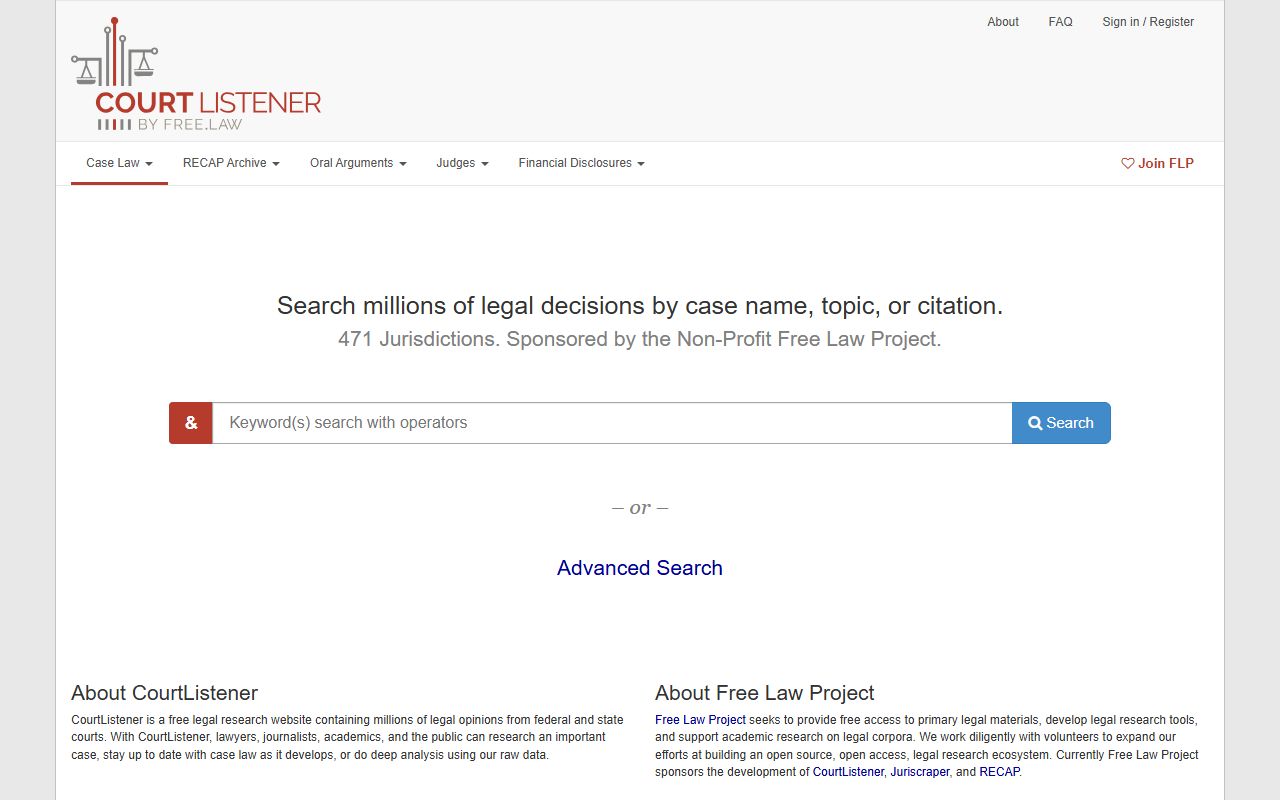
Research tools can support context, but official case status and certified documents must come from the originating court.
Frequently Asked Questions
Where are Lake County court records kept?
State court records are kept by Lake County District Court and Court Administration in Two Harbors. Marriage certificates are handled by Lake County Vital Records in the Recorder's Office. Divorce and probate records are court files.
Can Lake County court records be searched online?
Many public District Court records can be searched in MCRO. Online access is limited by Minnesota court rules, so some public records must be checked at the courthouse terminal or through Court Administration.
Is the Lake County jail roster a court record?
No. The jail roster is sheriff detention data. It can show custody status, but the jail warns that arrest is not guilt or conviction. Court status should be checked through MCRO or Court Administration.